
Partner for Delivering Excellence
Partner for Delivering Excellence
 Need Help?


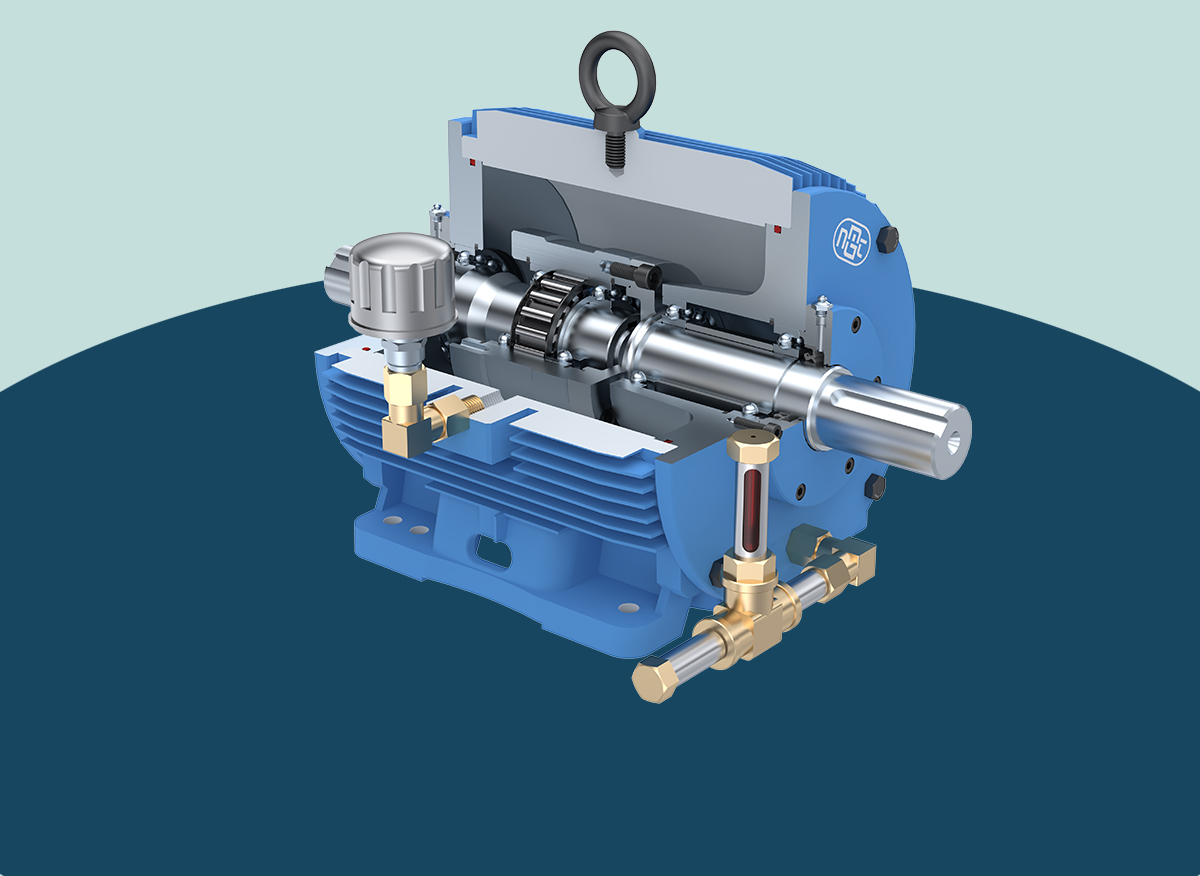
Backstopping function prevents reverse rotation when input drive is discontinued or power supply failure to input drive. The freewheel clutch continues overrunning / freewheeling when the equipment is in operation or working mode and it engages if reverse rotation occurs unexpectedly. Backstop/Holdback is used to prevent the shaft from rotating in the opposite direction.
This function simply achieved by anchoring one race of the clutch so that the other race is free to rotate in one (required) direction but is immediately locked in reverse direction. Normally, outer race or outer race flange or torque arm of the clutch is fixed to the stationary part - equipment frame and inner race fitted on to the drive shaft- rotating freely.
Application: Conveyor, Bucket Elevator, Lifter, Motor Wintch, Crane, Elevators
The overrunning clutch is automatically disengaged when the driving member rotates faster than the driven member. Various situations of engagement and disengagement are arbitrarily repeated when the freewheel clutch inner and outer races engage each other to transmit torque and when the freewheel clutch engages due to the difference in rotating speed and direction between the inner and outer races. This has the same behaviour as a freewheel on the rear bicycle wheel.
Application: Large Blower (Fan), Kiln, Heavy Industry Machinery, Crusher, Textile Machines, Agricultural Machinery.
Indexing function allows the conversion of reciprocating motion applied to the driving race of the clutch into unidirectional intermittent (rotational) motion of the driven race. Transmits torque to the inner race (shaft) by converting the outer race motion for a certain cycle into intermittent rotary movement. High-frequency engagement and freewheeling are repeated in this application.
Used for Packaging Machines and steel sheet in presses. The intermittent movement can also be used for obtaining slow rotational speeds for products such as inking rollers. In this application the clutch is often called "Indexing / Feeding" clutch.
Application: Cutting Machines, Press, Quilting Machines, Packing Machines, Textile machines, Printing machines, Filling plants
The Basic Principle of Freewheel One-way clutch is based on wedge friction theory. Free wheel one way clutch is mechanical device having special characteristics:
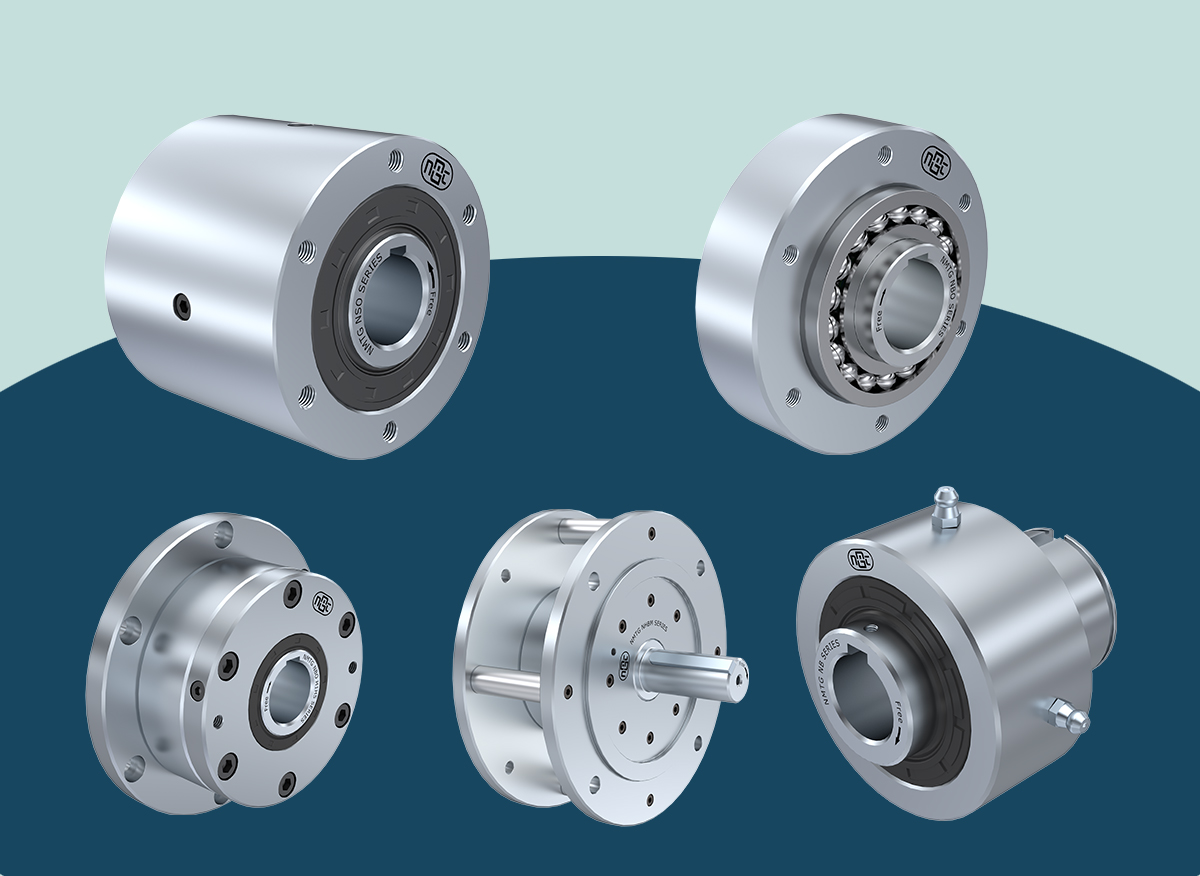
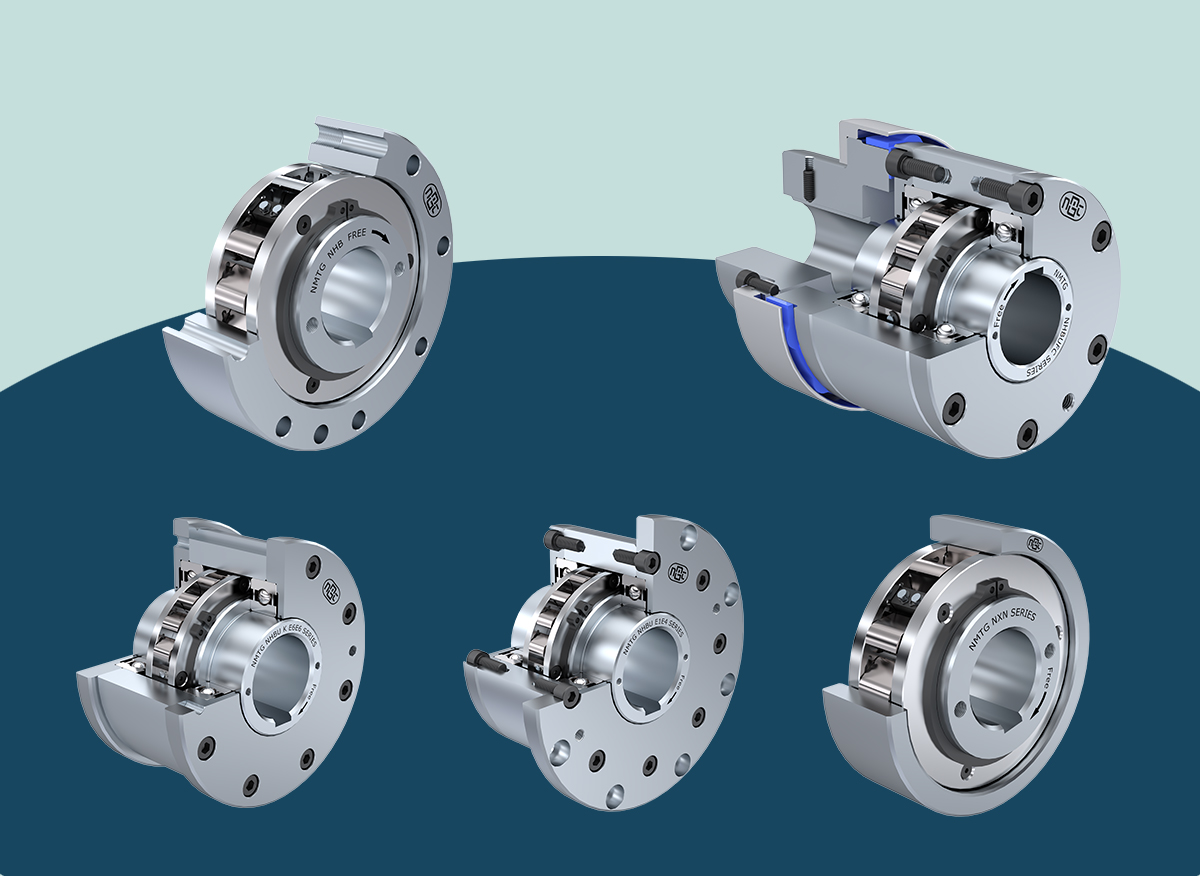
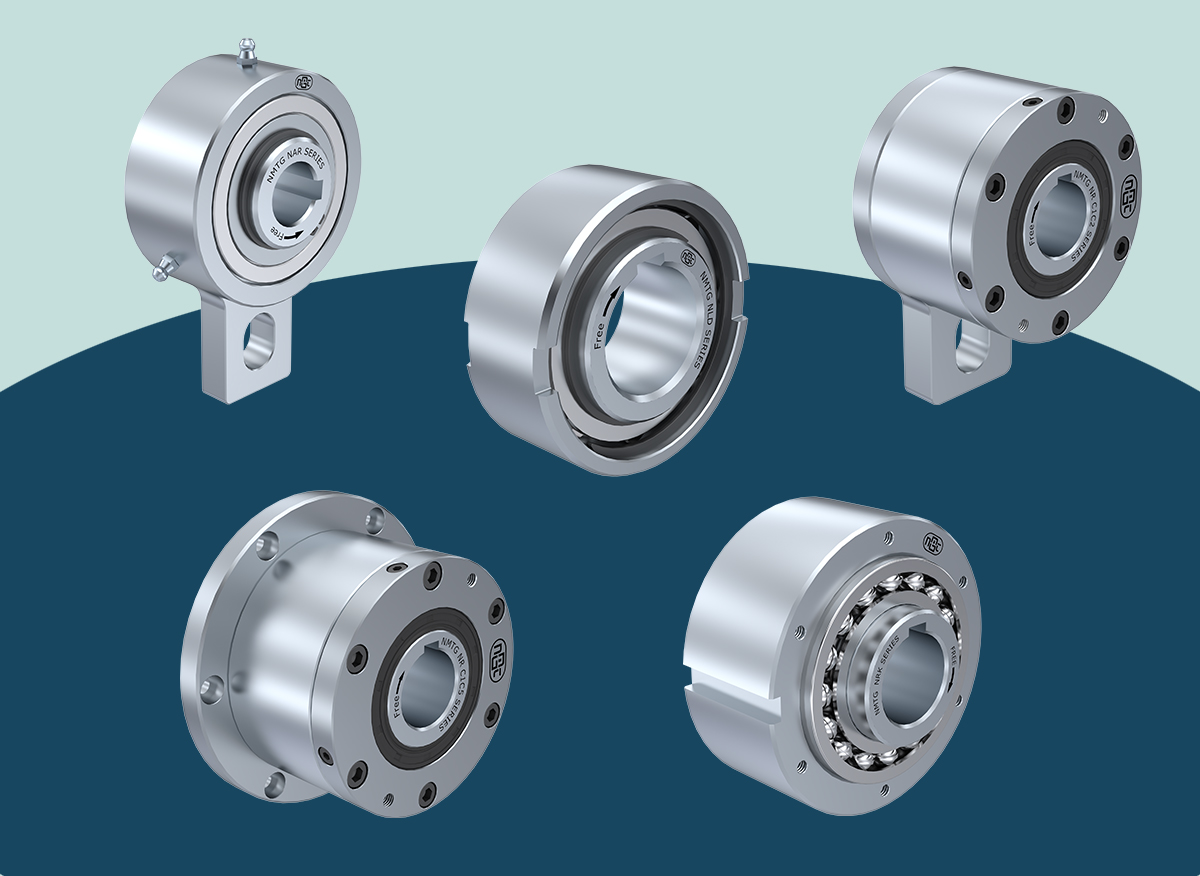
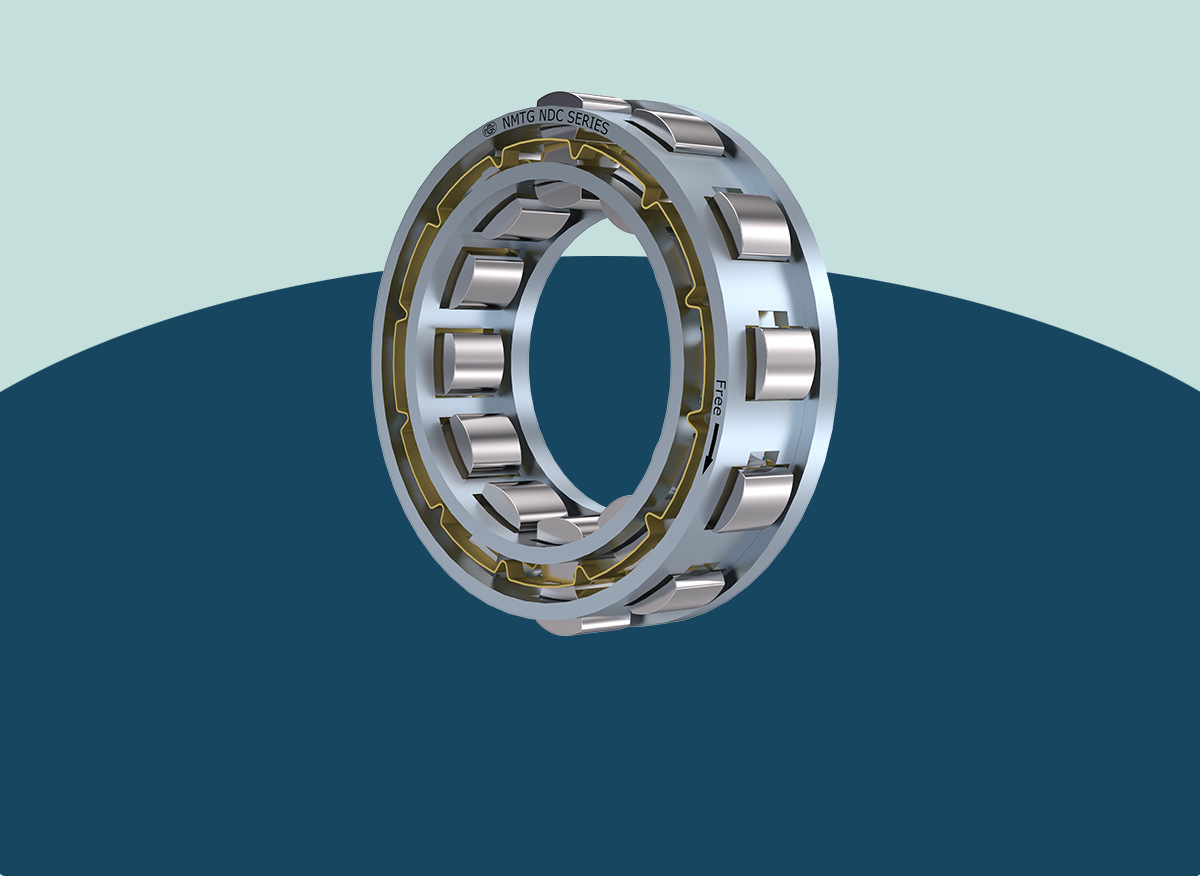
NMTG Freewheel One-way clutches are designed to transmit torque in one direction, and overrunning (Freewheeling) in opposite direction. As the contacts between wedging elements (Roller, Sprag, CLS Cam, NDC Sprag, etc.) with Inner race & Outer race, these generates clamping forces. NMTG all Freewheel One-way clutches design utilize the same principles of operation. The three most common type of function/applications are listed below.
Freewheel One-way Clutches are used as:
NMTG Freewheel one way clutches are available in three basic designs:
Freewheel clutch speed is a major determining factor in selecting the design best suited for each application. Roller clutches are used for applications with low-to-medium overrunning speeds and for indexing. Sprag & Centrifugal Lift off Sprag (CLS) clutches are the choice for applications with high overrunning speeds and for backstopping.
With each basic design there are several variations to choose from to meet specific application requirements. These variations include clutches with or without internal bearings, as well as a range of mounting flanges, covers and couplings.
Freewheel One-Way Clutches are precision-engineered mechanical components designed to transmit torque in one direction while allowing free rotation in the opposite direction. These clutches are widely used in industrial power transmission systems where reliable backstopping, overrunning, and indexing functions are essential. At NMTG, we manufacture high-performance Freewheel One-Way Clutches that meet the demanding requirements of industries across the USA.
Our freewheel clutch solutions are designed for heavy-duty applications, ensuring dependable operation in conveyor systems, mining equipment, cement plants, steel processing units, material handling systems, packaging machinery, and power generation facilities. Manufactured using high-grade materials and advanced engineering processes, our clutches provide long service life, low maintenance, and consistent performance in challenging industrial environments.
Whether your application requires torque transmission, reverse rotation prevention, or automatic engagement and disengagement, our Freewheel One-Way Clutches deliver reliable performance while minimizing downtime and improving operational efficiency.
NMTG has established itself as a trusted manufacturer and exporter of industrial clutch solutions for global customers. Our products are engineered to meet the performance expectations of modern industries and are supplied to customers looking for dependable mechanical power transmission components.
We understand the operational requirements of industrial facilities across the USA and provide solutions that help improve productivity while reducing maintenance costs.
A Freewheel One-Way Clutch transmits torque in one direction while allowing free rotation in the opposite direction.
They are commonly used in conveyor systems, mining equipment, cement plants, steel mills, packaging machinery, and industrial automation systems.
Both operate on similar principles. The term "Overrunning Clutch" generally describes the operating function, while "Freewheel Clutch" is often used as the product name depending on the application.
Yes. Heavy-duty models are designed for high torque applications in demanding industrial environments.
Yes. NMTG offers customized clutch solutions based on torque capacity, dimensions, and specific application requirements.